March 25, 2026
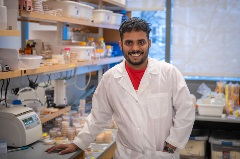
Grant: $1000 in Fall 2023
Education level at the time of the grant: PhD student
Project Description:
Fungi play a key role in decomposing wood, but their activity is often limited by nitrogen availability. Some wood-decaying fungi, like Hohenbuehelia mastrucata, overcome this by trapping and consuming nematodes as an alternative nitrogen source. This study examined how different nitrogen sources influence nematode-trapping behavior and gene expression in H. mastrucata. Results showed that organic nitrogen promotes growth-related pathways, while inorganic or absent nitrogen triggers starvation responses and increased production of enzymes and proteins linked to nematode capture.
How did the grant process or the project itself influence you as a scientist/researcher?
The grant process enhanced my ability to communicate my research to the community. I used simpler language to clearly convey the importance of my work to a broader audience. The funding from Sigma Xi enabled me to venture into the field of transcriptomics and gain new skills to analyze and interpret omics data sets. These experiences are valuable as I pursue a career as an academic researcher and train and mentor the next generation of scientists.
What advice would you give to future applicants?
Stay curious and love your science. The application process might feel difficult, but trust in yourself and let your passion lead you as you craft a compelling grant story. When unsure, reach out for help—whether from a colleague, friend, or advisor—and have them review your application. Remember, science is a collaborative effort, so let's strengthen it together as a community.
Where are you now?
I am currently experiencing an exciting, yet anxious phase in my academic journey. I am working on my thesis and aim to defend it in the summer of 2026. I am also submitting applications for potential postdoctoral positions.
Students may apply for Sigma Xi research grants by March 15 and October 1 annually at www.sigmaxi.org/giar.